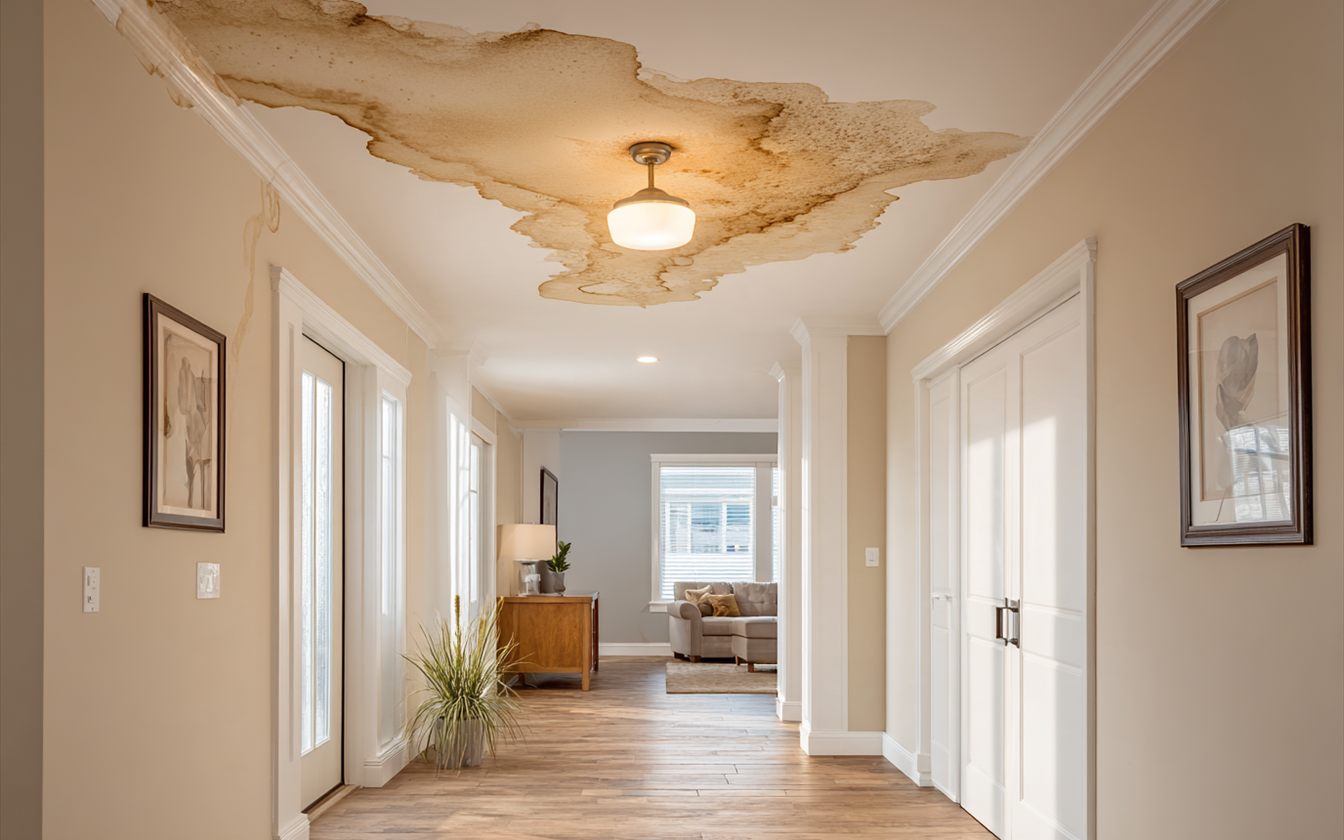
A water stain on the ceiling is a message from somewhere above it. Sometimes the source is obvious: the stain is right under the upstairs toilet. Sometimes it isn't, because water travels along joists, pipes and the top of the drywall before it comes through. The stain itself can't tell you for sure where the water came from. But its shape, color, location and timing give good clues, and those clues help a restoration company find the source faster.
Shape
- A round ring, darker in the middle: water dripping onto one spot from directly above. Common under toilets, tub drains and showers.
- A long, narrow stain: water that ran along a joist or a pipe before soaking through. The source is usually at one end of the line.
- An irregular, spreading blot: a lot of water at once, or a slow leak over a wide area, often from a supply line or an appliance upstairs.
- Several rings inside each other: a leak that has come and gone over time. Each ring marks where the water dried and left minerals behind.
- A stain around a light or fan: water finding the fixture box, which is a low point with an opening. Turn off the power to that fixture.
Color
- Tan or light brown: the most common color, from minerals and from dust and wood in the ceiling.
- Dark brown or yellow-brown: water that has passed through more material, such as old insulation or wood, or a leak that has gone on for a long time.
- Rust-colored spots: sometimes water dripping from nails or metal fasteners above.
- No color, just a damp, darker patch: fresh water that hasn't dried yet, a sign the leak is active.
Location and Timing
| Where and when | What it often points to |
|---|---|
| Under a bathroom, any weather | Toilet seal, tub or shower drain, shower pan, supply line |
| Under the laundry room | Washer hose, drain or the washer itself |
| Near an outside wall, during rain | Rain getting past the roof edge, flashing, a window or siding |
| Spreads during rain, stops when it's dry | Rain getting in somewhere above |
| Grows after showers or baths | The bathroom above |
| Appears after a cold snap | A pipe that froze and split in the ceiling or an outside wall |
| Near an attic access or vent | Condensation or a roof vent leak |
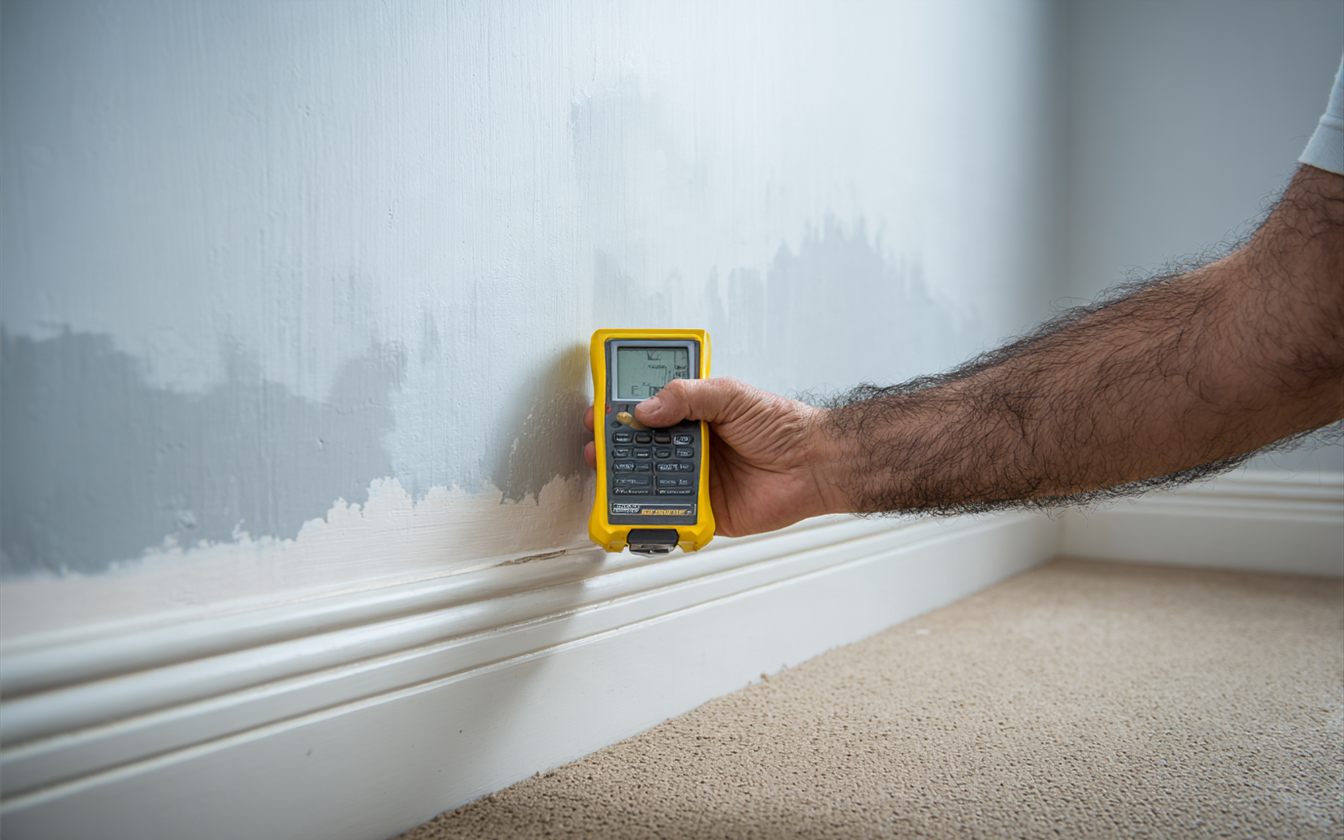
These are patterns, not rules. A moisture meter and a thermal camera are how the actual wet area gets mapped.
When to Worry
Some stains are old and dry, from a leak that was fixed long ago. Others are active. Signs that water is still getting in:
- The stain is growing or getting darker
- The drywall feels soft, or it sags or bulges
- Paint is bubbling or peeling
- Water is dripping, or there's a damp smell
- A new ring has appeared inside an old one
A sagging ceiling is a safety issue. It's holding water and can fall. Keep people out from under it, turn off power to any fixtures in it, and call.
Why Paint Isn't the Fix
Painting over a stain from an active leak hides it while the water keeps working. Drywall that has been wet for a while weakens, and the insulation above it stays wet against the framing. Once the source is fixed and a meter shows the area is truly dry, stain-blocking primer and paint can cover a small, sound stain. If the drywall is soft or sagging, it has to be replaced.
Taking Useful Photos of a Stain
Good photos help the company and your insurer. Take a wide shot that shows the whole room and where the stain sits in it. Then take a closer one with a tape measure or a common object for scale. If you can, take the same shot again a day later from the same spot, so anyone can see whether it's growing. Photograph the room above the stain too: the bathroom floor, the base of the toilet, the tub edge or the washer. A dated series of photos often tells the story better than any description.
Questions
Why is the stain nowhere near the bathroom?
Water runs downhill along whatever it touches first: a joist, a pipe, the back of the drywall. It comes through where it finds a low spot or a seam, sometimes several feet from the source.
Can a stain come from condensation instead of a leak?
Yes. In winter, warm, moist air can condense in an attic or on cold ducts and drip onto the ceiling below. Those stains often show up near attic access points, bathroom fan ducts or outside walls during cold weather.
Should I cut a hole to look?
No. Leave that to the restoration company. It will use meters first, and if the ceiling needs to come out, it can remove the wet section cleanly and safely.
Around Marysville
Ceiling stains under upstairs bathrooms are common calls from Sunnyside and Arlington Heights. Lake houses near Lake Goodwin see them after cold snaps. The full ceiling and wall page: a stain on the ceiling or wall.
EPA guidance on moisture and indoor air at home

Moving Back In: The Last Walkthrough After a Water Job
Readings, smells, finishes and paperwork before you sign off.
What a Water Damage Inspection Looks At
Meters, thermal cameras, and why some walls get opened.