Burst Pipe and Appliance Water Damage in Marysville
On Marysville's plateau, most water damage has nothing to do with rain. It comes from inside the house: a supply line, a fitting, a water heater, a washer, a dishwasher, an ice-maker line. These fail in two ways. A sudden break puts a lot of clean water on the floor fast. A slow drip runs for weeks behind a cabinet or inside a wall before anyone sees it. Either way, the first move is the same: shut the water off, then work out where it went.
Shut It Off, Then Find Where It Went
- Close the main shutoff. On many newer homes it's in the garage near the water heater, or in a utility closet. Find it before you need it.
- Turn off the water heater if it's the source: power off at the breaker for an electric unit, or set the gas control to off or vacation.
- Cut power to outlets and lights in the wet area.
- Open a faucet on the lowest level to drain the lines, once the main is closed.
- Look for the edges. Check under cabinets, in the room below, along the wall on the other side, and in the crawlspace if you can get there safely.
- Photograph the source and every wet area.
Where Lines Fail in Newer Plateau Homes
The subdivisions around Sunnyside, Whiskey Ridge, Getchell and Smokey Point were mostly built in recent decades. Their plumbing is newer than what you'd find in the old downtown houses, but newer doesn't mean it can't leak. The usual weak points:
- Fittings and connections on PEX and other plastic lines, especially where a crimp or clamp wasn't seated right
- Braided supply lines to toilets and faucets, which can burst when they age
- Ice-maker and fridge lines, thin tubing that cracks or pulls loose when the fridge is moved
- Washer hoses, rubber ones especially, which weaken over the years
- Dishwasher supply and drain connections under the sink
- Water heaters, where a tank, a relief valve or a fitting can fail
- Hose bibs on outside walls in a hard freeze, if the hose was left attached
More on this: newer plateau homes and where the water comes from.
A Water Heater Leaking in the Garage
Garage water heaters are common in Marysville's newer homes. A tank that's starting to fail often weeps for a while before it lets go: rust at the base, a damp ring on the slab, a drip from the relief valve line. When it does fail, it can empty fifty gallons or more onto the garage floor. That water runs under the door into the house, soaks the bottom of the shared wall, and ruins whatever is stored on the floor. Shut off the cold supply to the tank and the power or gas, keep clear of hot water, and call.
Bathrooms
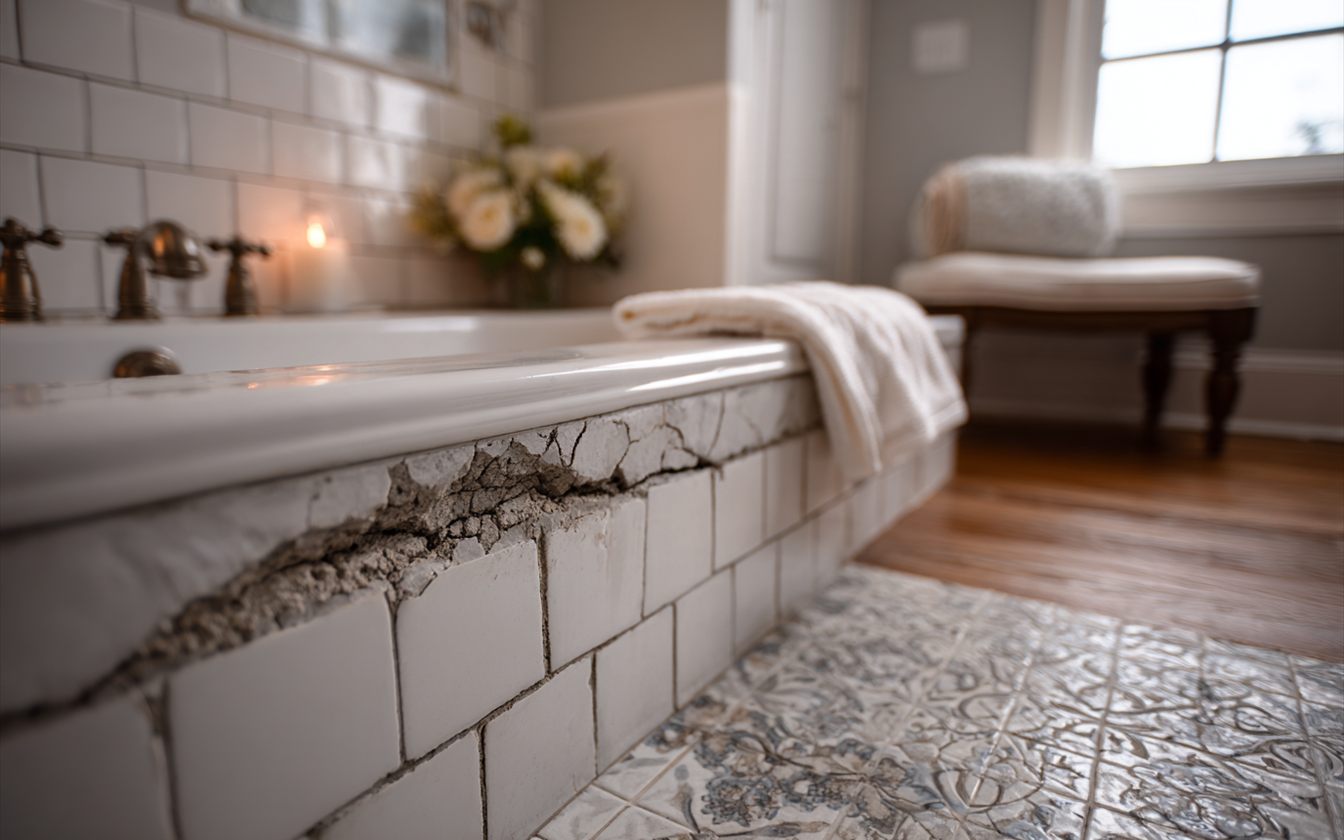
Bathroom leaks are often slow, and they show up somewhere else. A toilet wax ring that's failing, cracked grout or caulk at the tub edge, or a leaking shower pan can drip for months into the subfloor and the ceiling below. The first sign is often a stain on the kitchen or living room ceiling, or a loose toilet that rocks. More on reading those stains: reading a water stain on the ceiling. On a rural property with its own well: wells, pressure tanks and pump houses.
Water Inside Walls and Under Cabinets
Clean water from a pipe still causes damage once it's in the wrong place. Inside a wall, it soaks the bottom plate, the insulation and the back of the drywall. Under cabinets, it gets into the toe-kick space and the particleboard cabinet floors, which swell and don't recover. A restoration company uses meters to find the wet area, opens what has to be opened, and dries the cavity and framing before anything is closed up. Cabinets can sometimes be saved by removing the toe kick and drying underneath. Swollen cabinet bottoms usually get replaced.
Finding and repairing the failed pipe, fitting or appliance is separate work from drying the house. The restoration company handles the water and the damage. Ask which repairs it covers.
When a Cold Snap Splits a Line
Marysville doesn't freeze often, but when an arctic air mass settles over north Puget Sound for a few days, pipes in the coldest places can split. Those places are crawlspace lines near vents, supply lines in garage walls, and hose bibs with a hose still attached. The tricky part is timing. Ice in a split pipe acts like a plug, so the leak often doesn't start until things thaw, sometimes days later, when nobody is watching. Before a freeze, disconnect hoses, close crawlspace vents if your home has closable ones, and keep the garage door shut. After it, check the crawlspace, the garage and the outside walls as temperatures rise. If you find water, shut off the main first, then call.
What If I Don't Know Where the Main Shutoff Is?
On most newer Marysville homes, check the garage near the water heater, a utility closet, or near where the water line enters the house. Some homes also have a shutoff at the meter box near the street, which may need a special key. Finding it now, before anything leaks, is worth ten minutes.
Is Water From a Supply Line Clean?
It starts clean. But once it has run through a wall, under a floor or into a crawlspace, it picks up whatever is there, and it doesn't stay clean for long. That's another reason to get it out and dry things quickly.
Pipe and Appliance Calls Around Marysville
Down by the slough
Up on the plateau
Smokey Point and Lakewood
North along the Stillaguamish
- ArlingtonNorth county
- SilvanaNorth county
- StanwoodNorth county
- Warm BeachWest of I-5
- Lake GoodwinWest of I-5
East toward the foothills
- Lake StevensToward the foothills
- Granite FallsToward the foothills
- MachiasToward the foothills
- SnohomishToward the foothills
If the water reached the floor: when the floor changes.