
Much of Marysville's housing sits on higher ground east and north of downtown: Sunnyside, Whiskey Ridge, Getchell, Smokey Point, Lakewood. Most of it is newer, built as the city grew and annexed land in the early 2000s. Up there, a creek coming over its banks is rare. But newer homes still get water damage, and it almost always comes from inside. Knowing the usual sources helps you catch a leak early, and helps you tell a restoration company where to look.
The Usual Suspects
| Source | Where it is | How it fails |
|---|---|---|
| Braided supply lines | Under sinks, behind toilets | The braid frays or the crimped ends let go, sometimes all at once |
| PEX and other plastic lines | In walls, ceilings and crawlspaces | A fitting or crimp ring that wasn't fully seated starts to drip |
| Ice-maker and fridge lines | Behind the fridge | Thin tubing kinks, cracks or pulls loose when the fridge is moved |
| Washer hoses | Behind the washer, often upstairs | Rubber hoses bulge and burst with age |
| Dishwasher connections | Under the kitchen sink | A supply or drain connection loosens and drips under the cabinet |
| Water heater | Often in the garage | The tank corrodes, a fitting leaks, or the relief valve discharges |
| Toilet wax ring | Under the toilet | A failing seal lets water into the subfloor with every flush |
| Tub and shower | Upstairs bathrooms | Failed caulk, grout or a shower pan lets water into the floor |
Why Upstairs Matters
A lot of plateau homes are two stories, with bedrooms, bathrooms and often the laundry upstairs. That's convenient until something leaks. Water from an upstairs bathroom or laundry runs through the floor system and comes out of the ceiling below, often in the kitchen or living room. Sometimes it shows up well away from the source, because it ran along a joist first. The first sign is usually a stain, a drip from a light fixture or a sagging patch of drywall. More: reading a water stain on the ceiling.
The Garage Water Heater
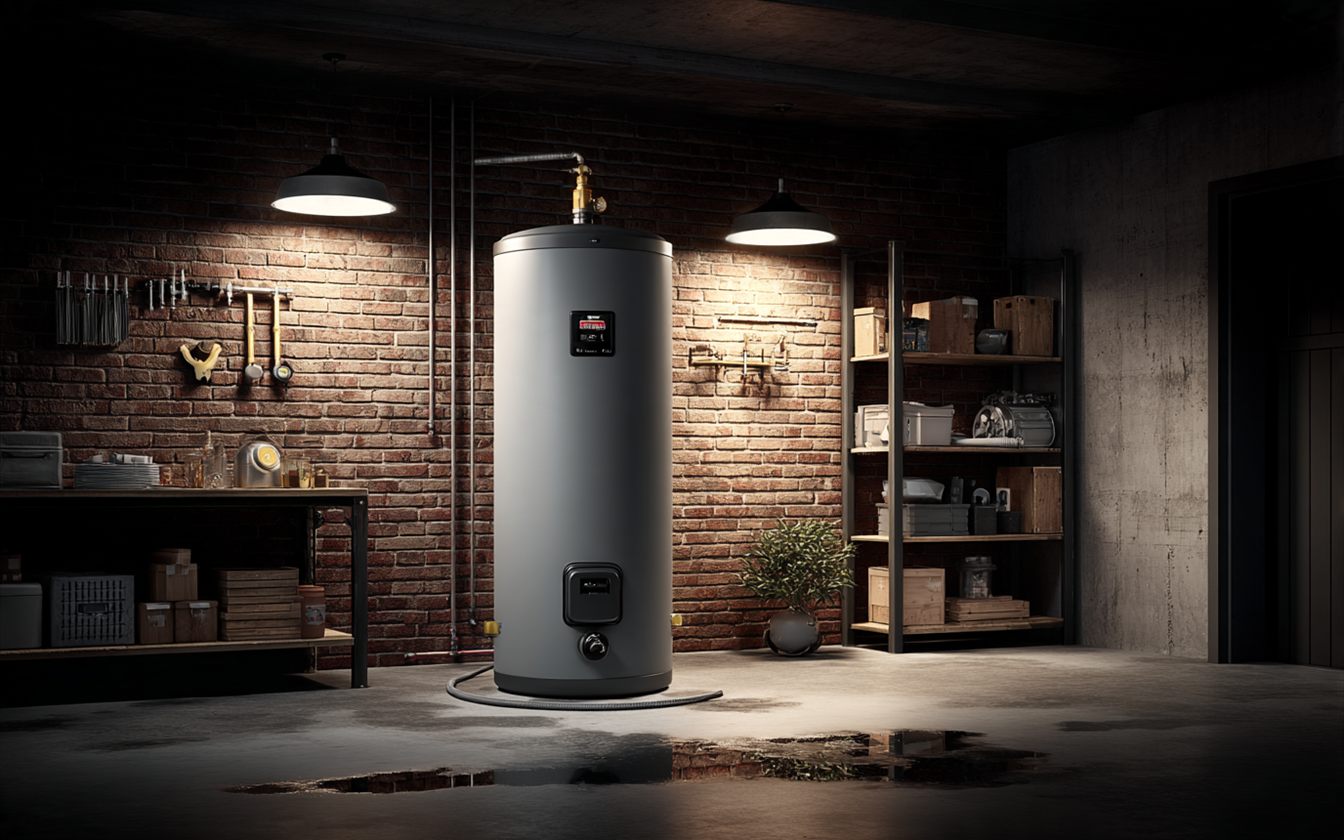
Many newer Marysville homes keep the water heater in the garage. When a tank starts to fail, it often warns you first: rust at the base, a damp ring on the concrete, water dripping from the relief valve's discharge line. When it lets go entirely, a standard tank can empty forty or fifty gallons across the slab. That water runs toward the lowest point, which is often the door into the house or the stored boxes along the wall.
Tank water heaters don't last forever. If yours is getting older, have it looked at, and keep the area around its base clear so you'd see a leak.
Floors That Hide It
Newer homes often have laminate or vinyl plank floors throughout the main level, laid as a floating floor that runs under walls and through doorways. Water from a dishwasher or a fridge line gets underneath and spreads before the surface shows anything. Laminate shows it by peaking at the seams. Vinyl plank may look fine while the subfloor beneath stays wet. More: when the floor changes.
A Ten-Minute Walkthrough
Once or twice a year, walk the house with a flashlight:
- Find the main shutoff and make sure it turns.
- Look under every sink for drips, stains or swollen cabinet bottoms.
- Check the braided lines to toilets and faucets for fraying or rust at the ends.
- Pull the fridge out a little if you can and look at the ice-maker line and the floor behind it.
- Look at the washer hoses for bulges or cracks.
- Check the base of the water heater and the relief valve line.
- Look at ceilings under bathrooms and the laundry for any new marks.
None of this replaces a repair, but it catches small leaks before they turn into big jobs.
When You Find One
Shut off the water to that fixture, or the main if you can't isolate it. Turn off power to anything electrical in the wet area. Photograph it, then call. Once clean water has spread under a floor or into a wall, it needs meters and drying equipment to get it out. The full process is on the pipes, heaters and appliances page.
Questions
Are newer homes less likely to have water damage?
Less likely to have some kinds, like corroded old pipes or failing old drains. But newer homes have their own weak points: fittings, supply lines, appliances and floating floors that hide water.
Should I replace rubber washer hoses?
Many people switch to braided hoses and replace them every few years as a habit. Check your washer's manual and talk to whoever installs it.
Does a leak detector help?
Small battery-powered water alarms near the water heater, the washer and under sinks can warn you early. Some shut-off systems will close the main automatically. They don't prevent leaks, but they can make one much smaller.
Around Marysville
These are the usual calls from Whiskey Ridge, Getchell Hill and Smokey Point.
EPA WaterSense: finding and fixing household leaks

Moving Back In: The Last Walkthrough After a Water Job
Readings, smells, finishes and paperwork before you sign off.
Wells, Pressure Tanks and Pump Houses: Rural Leaks North of Town
Well systems, pressure tanks and long service lines on north county properties.