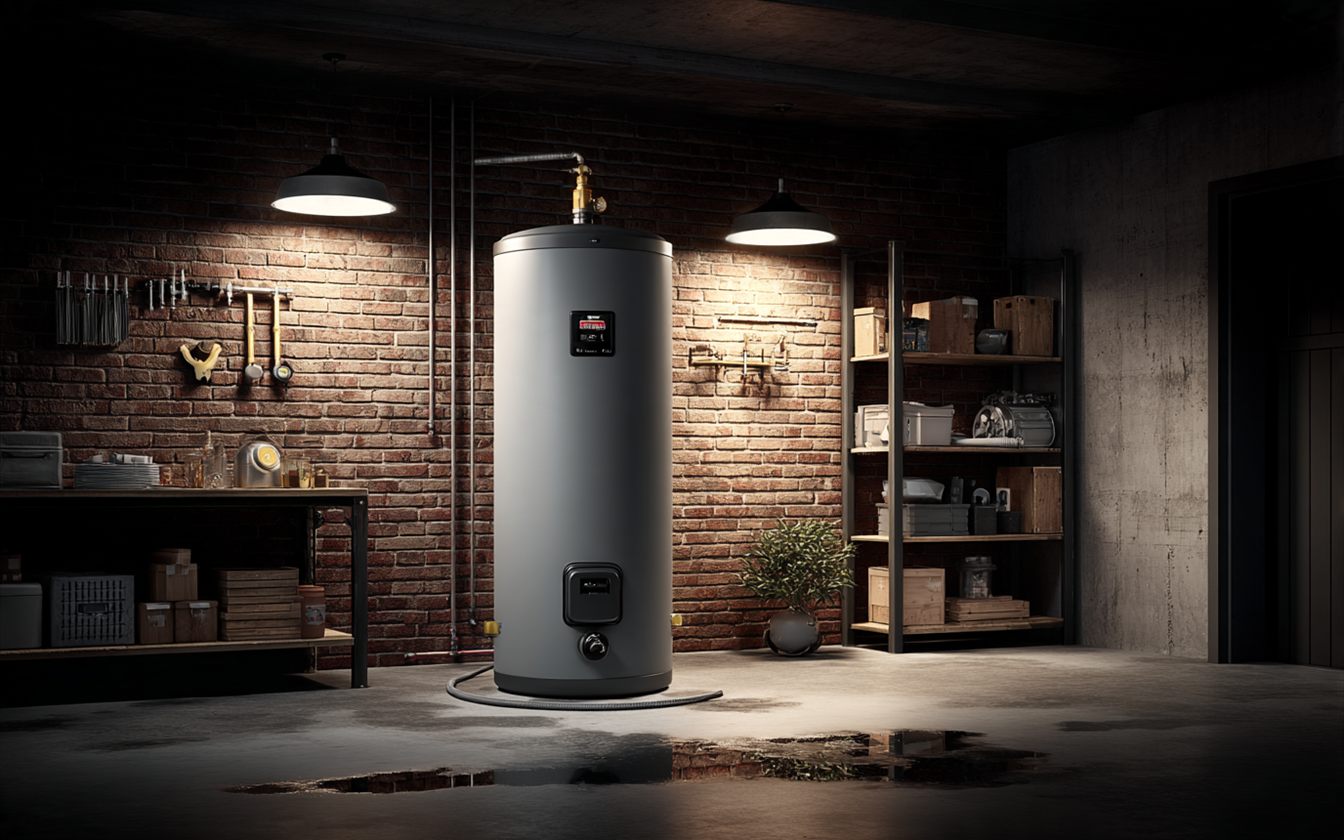
Drive a few minutes out of Marysville in almost any direction, toward Arlington Heights, Lake Goodwin, Machias or the hills above the Stillaguamish, and city water gives way to private wells and small community systems. Those homes get the same leaks as anyone else: water heaters, washers, bathrooms. But they also have a whole water system of their own, from the well to the tap, and every part of it can leak. A city home's leak stops when the main is closed. A well system keeps pumping until someone cuts the power.
How a Well System Works
| Part | What it does | Where it is |
|---|---|---|
| Well and submersible pump | Lifts water from the aquifer | In the well casing, outside |
| Pressure switch | Turns the pump on when pressure drops, off when it's reached | On the pipe near the pressure tank |
| Pressure tank | Stores water under pressure so the pump doesn't run constantly | In a pump house, garage, crawlspace or utility room |
| Service line | Carries water from the well to the house | Buried, sometimes a long run |
| Treatment equipment | Filters, softeners or other treatment, if any | Near the tank or where the line enters the house |
When a pipe bursts anywhere after the pressure tank, the pressure drops. The switch turns the pump on, and the pump keeps sending water to the leak. On a rural property, nobody may notice for a while.
The Usual Leak Points
- Pressure tank fittings and the tank itself, which can corrode or fail with age
- The pressure switch and its connections
- Filters and treatment equipment, especially housings and fittings that get opened for maintenance
- Pipes in an unheated pump house in a hard freeze
- The service line, where a break underground may show up as a soggy patch of yard, low pressure or a pump that never stops running
- Where the line enters the house, often in a crawlspace, which is easy to miss
Shutting It Off
On a well, closing the house's main valve is only half of it. To stop a leak properly:
- Turn off the power to the well pump at its breaker or disconnect, so it stops refilling the system.
- Close the main valve between the tank and the house, if there is one.
- Open a faucet low in the house to relieve the pressure, once the pump is off.
- Cut power to anything electrical in the wet area.
Label the pump breaker now, before there's a leak, so anyone in the house can find it.
Pump Houses and the Cold
Many rural properties keep the pressure tank in a small pump house or well house. In a Marysville-area cold snap, those small buildings can drop below freezing even when the house stays warm. A heat lamp or small heater that has failed, a door left open, or a gap in the insulation is enough to freeze a pipe or a fitting. As with any freeze, the leak often starts when things thaw. After a hard freeze, look inside the pump house, and listen for a pump that runs when no water is being used.
When the Power Goes Out
Rural north county loses power in winter windstorms more often than town does, and a well pump needs electricity. While the power is out, there's no water pressure, so a broken pipe may not show itself until the power comes back and the pump starts refilling the system. If a cold snap and an outage come together, walk the house, the garage and the pump house when power returns. Listen for a pump that keeps running, and check the floor around the pressure tank.
Water Damage From a Rural Leak
Clean water from a well line does the same damage as clean water from a city line. It soaks floors, walls, insulation and crawlspaces. The difference is volume and time, because a pump that runs unnoticed can put a great deal of water into a crawlspace or a garage. A restoration company handles the water and the damage: extraction, drying with readings, removal and rebuild. Repairing the well, pump, tank or treatment equipment is separate work.
Questions
How do I know if my service line is leaking underground?
Common signs are a wet or unusually green patch between the well and the house, lower pressure than usual, or a pump that cycles on when nobody is using water. Have it checked, because a slow underground leak can also send water toward the foundation.
Does water from a well count as clean water?
At the source, generally yes. Once it has spread into a crawlspace or under floors, treat it like any other water that has run through the house: get it out and dry everything properly.
Does the restoration company fix the well too?
Usually not. Repairs to the well, pump, pressure tank and switch are separate work. The restoration company handles the water and the damage it did inside the house.
Around North County
Wells and small water systems are common around Arlington Heights, Machias and Lake Goodwin. For leaks inside the house, see pipes, heaters and appliances.
EPA: private drinking water wells Washington Department of Ecology: wells

Newer Plateau Homes: Where the Water Usually Comes From
Supply lines, garage water heaters, upstairs laundries and ice-maker lines.
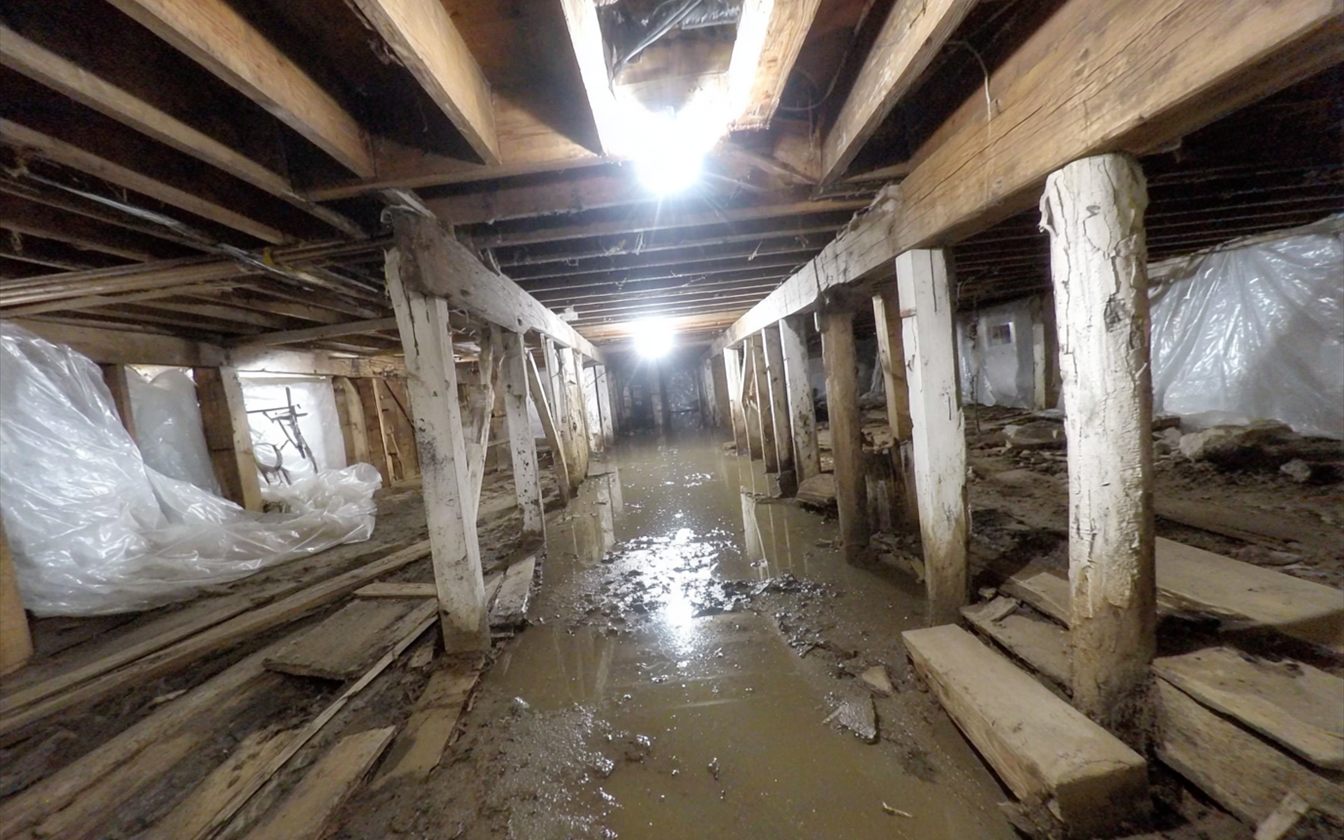
Crawlspaces on the Lowland: Standing Water Under the Floor
What happens under a house on wet ground, and how it gets dried.