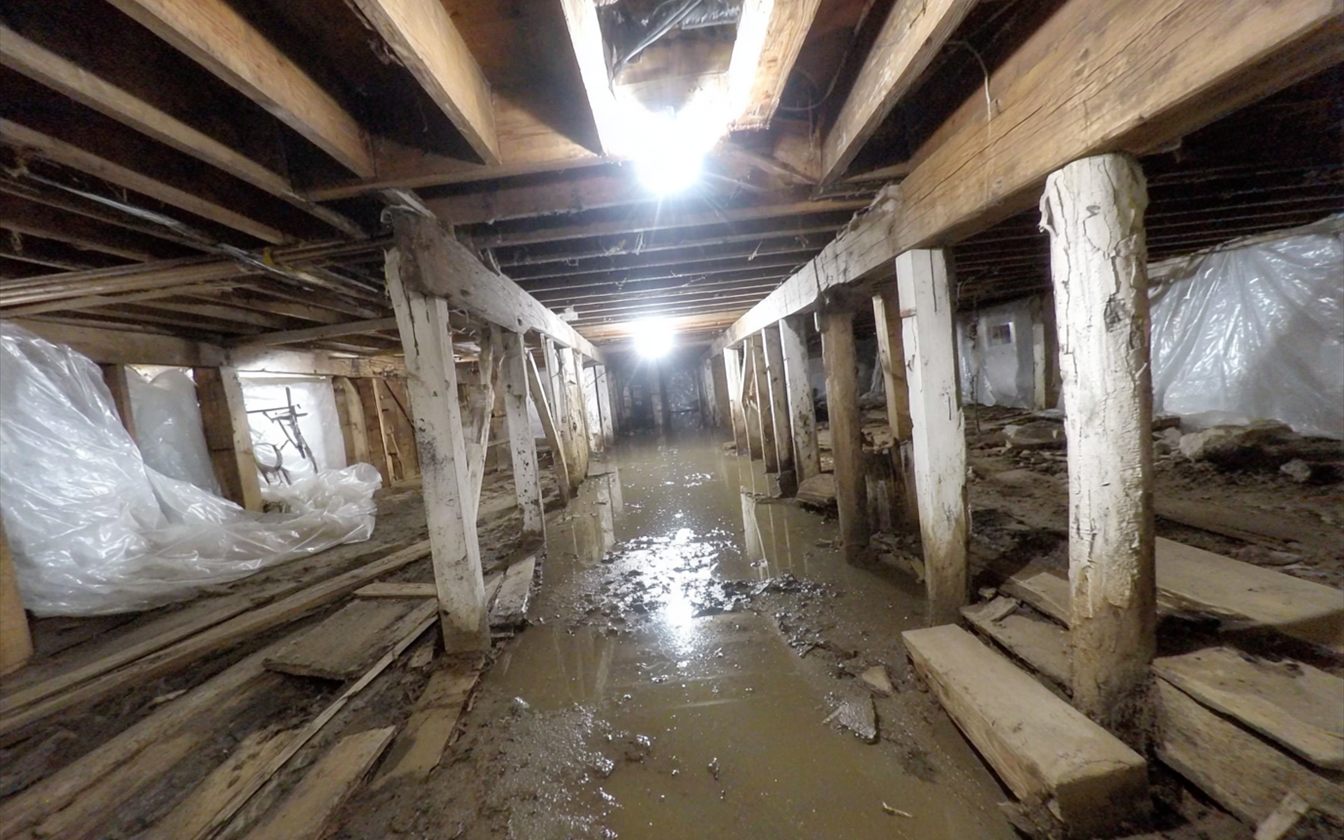
Most houses in Marysville and the towns around it sit over a crawlspace, a shallow space between the ground and the floor. On higher ground, a crawlspace can stay dry for years. On low ground near the slough, the creeks or the river valleys, it's a different story. In winter the water table rises, the soil fills up, and water comes into the crawlspace from below or from the sides. Standing water under a house doesn't announce itself. It just sits there, and it does damage the whole time.
How a Crawlspace Is Built
A typical crawlspace has:
- Bare ground, often covered with a plastic vapor barrier to keep ground moisture out of the space
- Foundation walls or a perimeter footing around the edge
- Posts and beams holding up the floor
- Floor joists and the subfloor above them
- Insulation between the joists, often fiberglass batts held up with wire or netting
- Vents in the foundation walls, and sometimes ducts and plumbing running through
All of that is meant to stay dry. When water comes in, every part of it takes some damage.
Where the Water Comes From
| Source | When it happens |
|---|---|
| Rising ground water | Long wet spells in winter, especially on low ground |
| Surface water from the yard | Heavy rain on a lot that slopes toward the house, or downspouts draining at the foundation |
| A creek or ditch backing up | High water in the creek corridors |
| River high water | Floods on the Stillaguamish, Snohomish or Pilchuck raising ground water across the valley |
| A plumbing leak | A supply line, drain or water heater line failing above or in the crawlspace |
What Standing Water Does
- Insulation soaks up water, sags or falls, and holds moisture against the subfloor.
- The vapor barrier traps water on top of it, or under it if it's torn.
- Wood framing stays damp, which over time can weaken it.
- Ducts in the crawlspace can fill with water or carry damp air into the house.
- The air in the house gets damper, because air moves up from the crawlspace into the living space.
You might notice a musty smell, cold floors, condensation on windows or a damp feel in the house before you ever look underneath.
How It Gets Dried
- Find and stop the source if possible, or at least understand it, whether it's ground water or a leak.
- Pump out the standing water.
- Remove wet insulation, which almost never dries well in place.
- Pull or replace the vapor barrier if it's torn or holding water.
- Dry the space with dehumidifiers and air movers set up in the crawlspace.
- Check the framing and subfloor with meters until they read dry.
- Reinstall insulation and a vapor barrier once it's dry.
If the water came from outside, there's also cleanup: silt and debris removed, and surfaces cleaned before drying.
Preventing the Next Time
Prevention depends on the cause, and some of it is work for other contractors: regrading a yard, extending downspouts, adding drainage, or encapsulating the crawlspace. A restoration company can tell you what it saw. Simple steps help too:
- Keep downspouts discharging well away from the foundation.
- Make sure soil around the house slopes away from it.
- Check the crawlspace after the first big storms each fall.
- Keep the access hatch clear so it's easy to look.
Ducts, Pumps and Equipment Under the House
Crawlspaces often hold more than framing. Furnace ducts run through many of them, and a duct sitting in standing water can fill up, split at the seams or come loose from its hangers. Then it carries damp air straight into the rooms above every time the system runs. Some homes have a sump pump or a crawlspace drain. If it has failed or the discharge line is blocked, the water has nowhere to go. Water lines and drains run through the space too, and a slow leak from one of them can look exactly like ground water. When a company dries a crawlspace, ask it to check the ducts, any pump, and the plumbing runs, not just the ground and the insulation. Wet duct insulation usually has to be replaced, and damaged duct sections should be repaired before the system is used heavily again.
Questions
Is a little water in the crawlspace normal?
Some dampness is common on low ground, but standing water or wet insulation isn't something to ignore. It keeps the wood above it wet.
Can't I just open the vents and let it dry?
Outside air in a Marysville winter is cool and damp. Opening vents rarely dries a wet crawlspace and can add moisture. Proper drying uses dehumidifiers.
My floors feel cold and the house smells musty. Could it be the crawlspace?
It could. Those are common signs of water or high moisture under the house. Have someone look, or look from the hatch with a flashlight.
Around Marysville
Low-ground crawlspaces are common near downtown and the waterfront, Jennings Park, in the valley at Silvana and in older Snohomish. See also yard and creek water and when the floor changes.
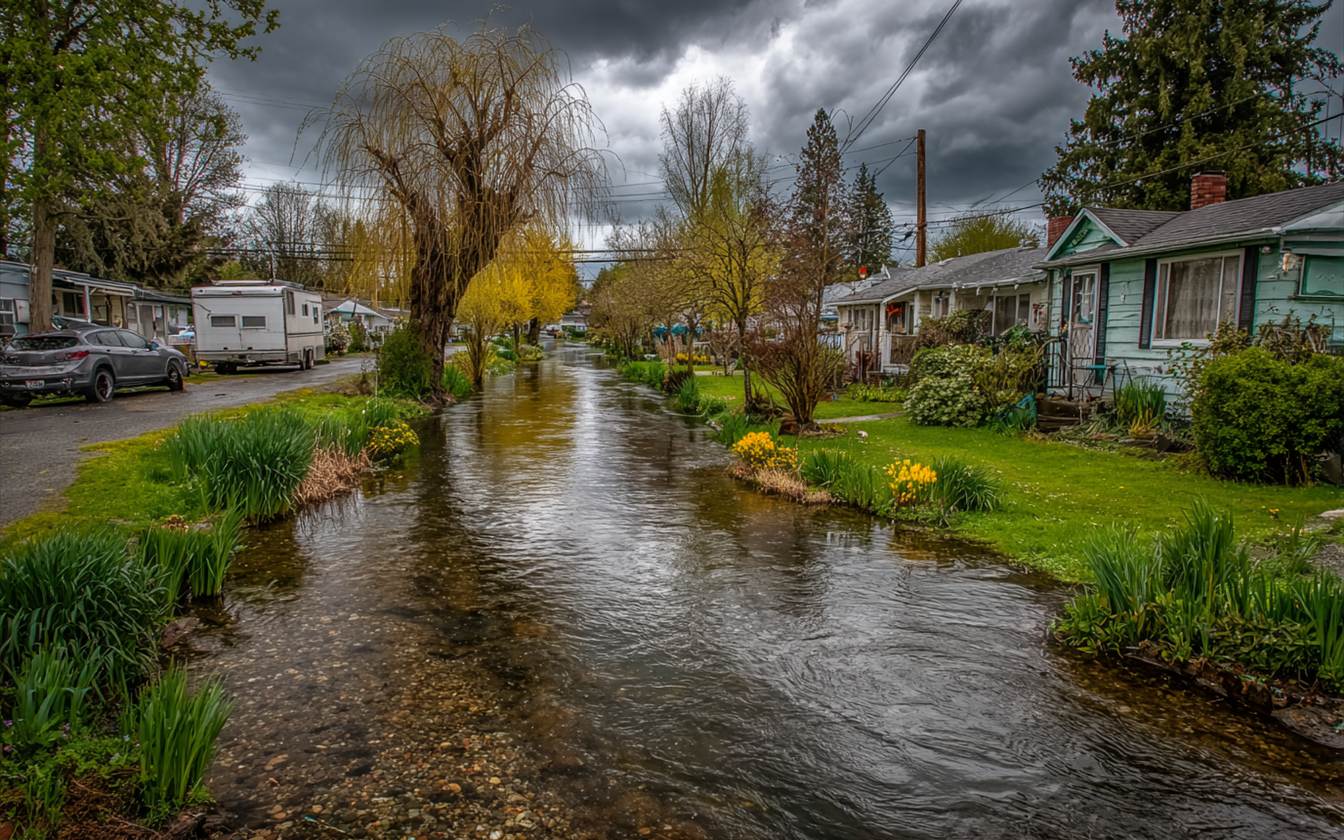
Quilceda Creek, Allen Creek and the 70 Small Streams
How two creek watersheds drain the city, and what that means for low lots.
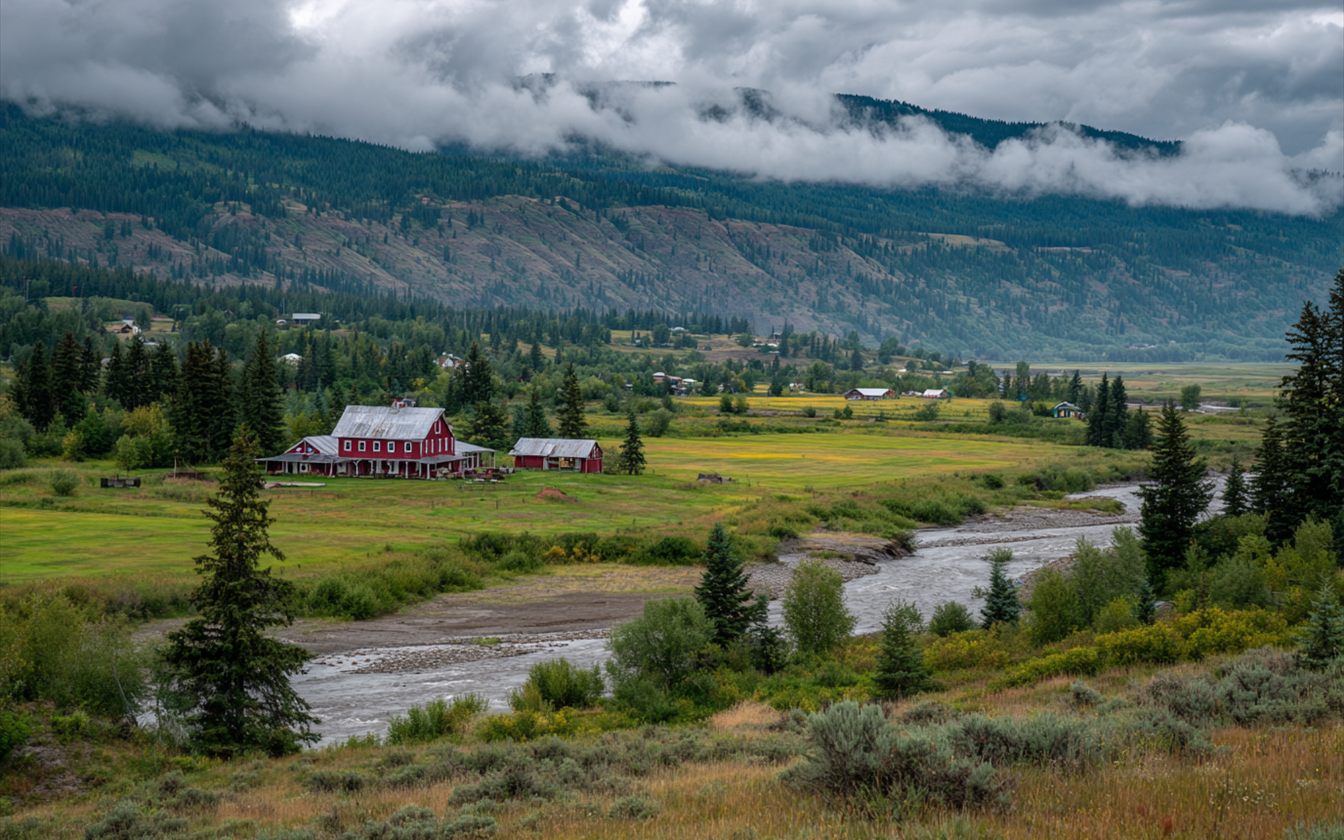
When the Stillaguamish Runs High at Arlington
Flood stages, the 2023 record, and what to do when the river comes up.