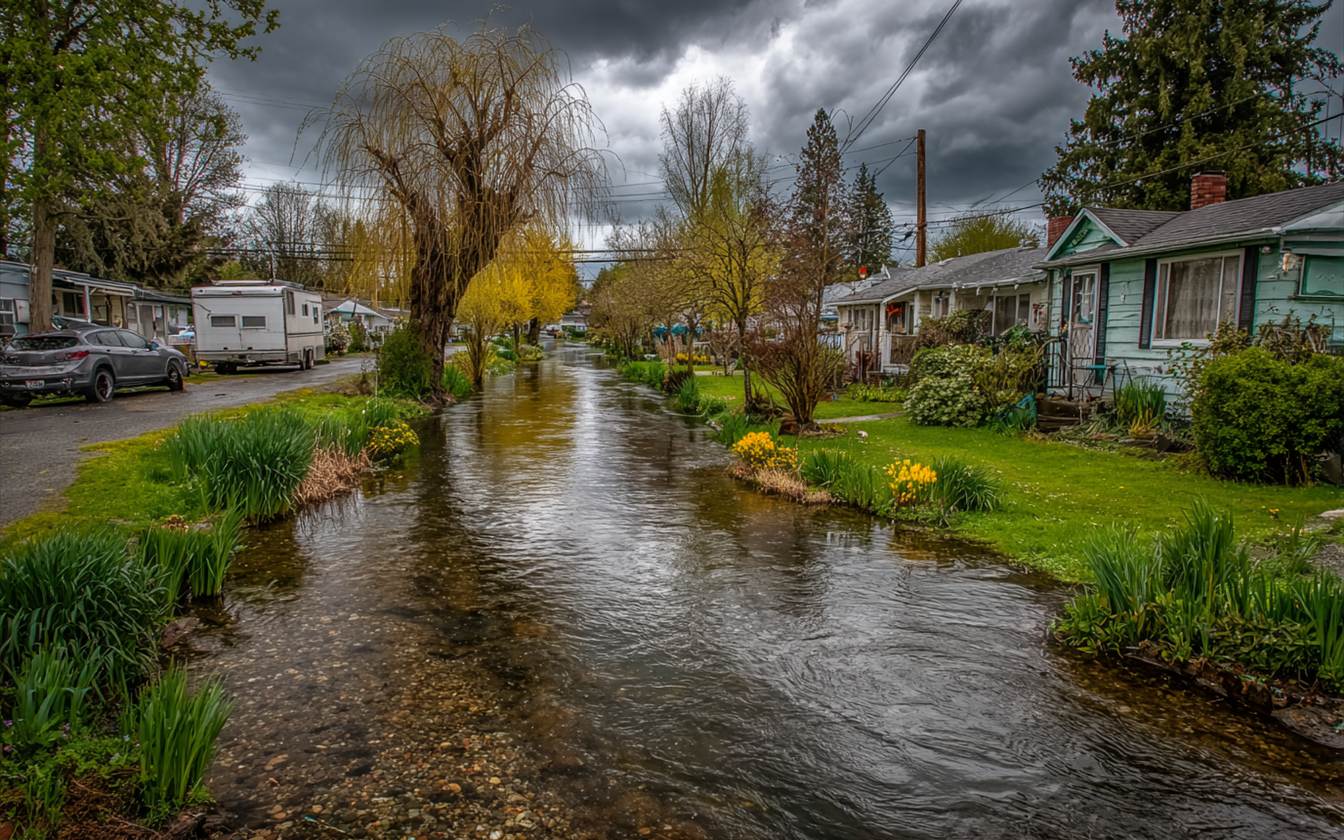
Ask most people in Marysville where the water goes when it rains and they'll say "the slough," and they're right. But it doesn't get there directly. The city sits in the watersheds of two main creeks, Quilceda Creek and Allen Creek, plus about seventy minor streams that all drain toward Ebey Slough and the Snohomish River. Ditches, culverts, roadside swales and back-yard channels connect them. Most of the year, nobody thinks about them. After a week of heavy rain, they decide which yards stay dry.
Two Watersheds, One Slough
Quilceda Creek drains a large part of the north and west side of the city, with branches reaching north toward Smokey Point and Lakewood. Its lower reaches run near the boundary with the Tulalip Reservation before meeting the slough.
Allen Creek runs through the middle of town. Its best-known stretch passes through the wetlands of Jennings Park, a bowl of marsh crossed by floating bridges, before heading to the slough.
The smaller streams are everywhere in between. Some are obvious, with names and culverts under the road. Others are just a low line across a few back yards that only carries water in winter.
How a Creek Neighborhood Takes On Water
Creek-side homes don't usually flood the way river towns do, with a wall of water. It's slower and quieter than that:
- Ditches and culverts back up. When a culvert is blocked with leaves or simply overwhelmed, water spreads into the nearest yards.
- The water table rises. Land near a creek sits closer to ground water, and in winter the soil can be full for weeks. Water then moves sideways to the lowest place it can find, often under a house.
- Yards drain the wrong way. A lot that slopes toward the house sends runoff to the foundation, and from there into the crawlspace.
- Low driveways and garages collect water that has nowhere else to go.
Where to Look After a Long Rain
| Look at | What to watch for |
|---|---|
| The crawlspace | Standing water on the vapor barrier, wet insulation hanging down, a damp, earthy smell from the vents |
| The low side of the foundation | Water pooling against the wall, soil washed away, wet siding at the bottom |
| The garage | Water coming under the door or up through cracks in the slab |
| Downspouts | Water discharging right at the foundation instead of away from it |
| The nearest ditch or culvert | Debris blocking it, or water standing above the pipe |
Crawlspace water is the one people most often miss. You can't see it from inside the house, and it can stand for weeks, soaking the insulation and keeping the framing above it wet. More on that: crawlspaces on the lowland.
What You Can Do Before It Rains
- Keep gutters and downspouts clear, and make sure downspouts discharge well away from the house.
- Look at which way your yard slopes. Water should move away from the foundation, not toward it.
- If a public culvert or ditch near you is blocked, report it to the city or county rather than clearing it yourself in high water.
- Check the crawlspace after the first big storms of the fall, with a flashlight from the access hatch.
- Know where your crawlspace access is, and keep it clear.
These steps don't stop a creek from rising, but they help keep everyday winter water away from the house. Most of the water that ends up under Marysville homes isn't a flood at all. It's ordinary rain that had nowhere better to go.
When It's Already Inside
Water that came from a creek, a ditch or a soaked yard counts as outside water. It carries silt and whatever was on the ground, so cleanup means removing more material and cleaning surfaces before drying, not just setting up fans. Wet crawlspace insulation usually has to come out. A torn or flooded vapor barrier usually gets replaced. Then the space under the house is dried with its own equipment. The full process is on the yard and creek water page.
Questions
Is creek water the same as flood water for insurance?
Often, yes. Standard homeowners policies usually exclude flooding from outside, including surface water and overflowing creeks. Flood coverage is typically a separate policy. Check your own policy and ask your agent.
My house isn't next to a creek. Can this still happen?
Yes. The smaller streams and ditches run through a lot of neighborhoods, and ground water doesn't need a visible creek to rise. Low lots anywhere in town can take water in a long wet spell.
Who maintains the ditches and culverts?
It depends on where they are. Some are city or county, some are on private property. If one near you is blocked or failing, the city or county can tell you who's responsible.
Around Marysville
The creek corridors run through Jennings Park, Pinewood and the lower streets of downtown and the waterfront. The tidal end of it all is covered in Ebey Slough and the levees.
National Weather Service forecasts and flood warnings for western Washington
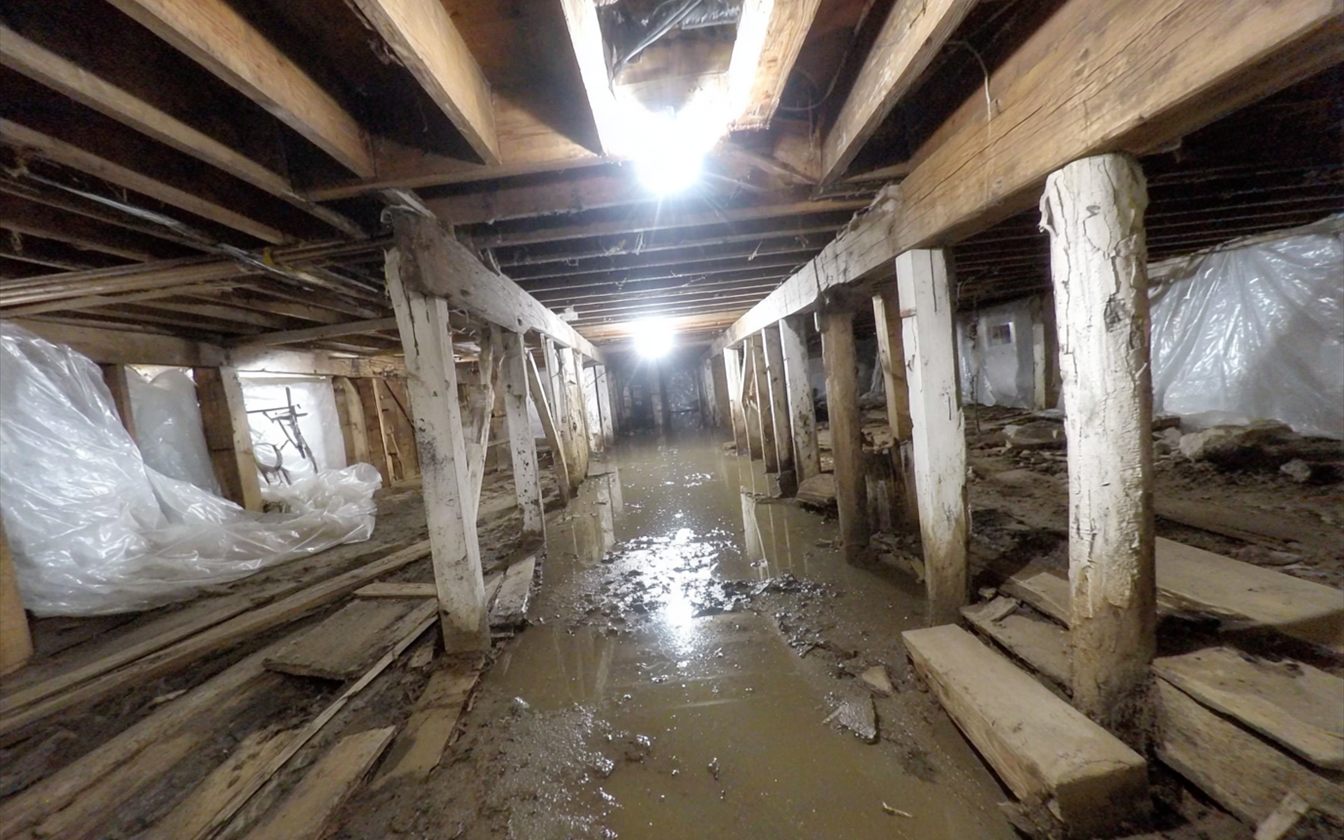
Crawlspaces on the Lowland: Standing Water Under the Floor
What happens under a house on wet ground, and how it gets dried.
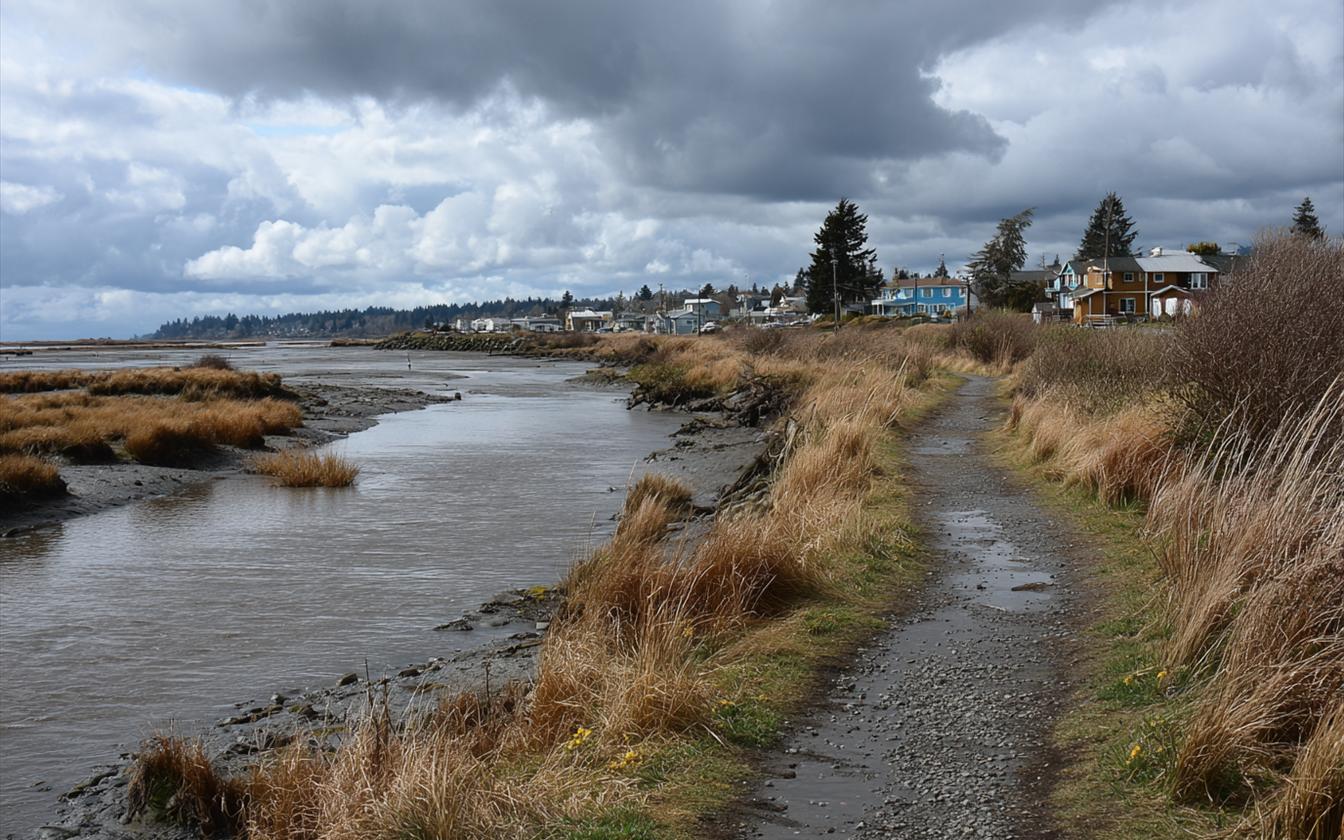
Ebey Slough, the Old Levees and the Qwuloolt Estuary
Why the town's edge is levee country, and the levee that was cut on purpose.