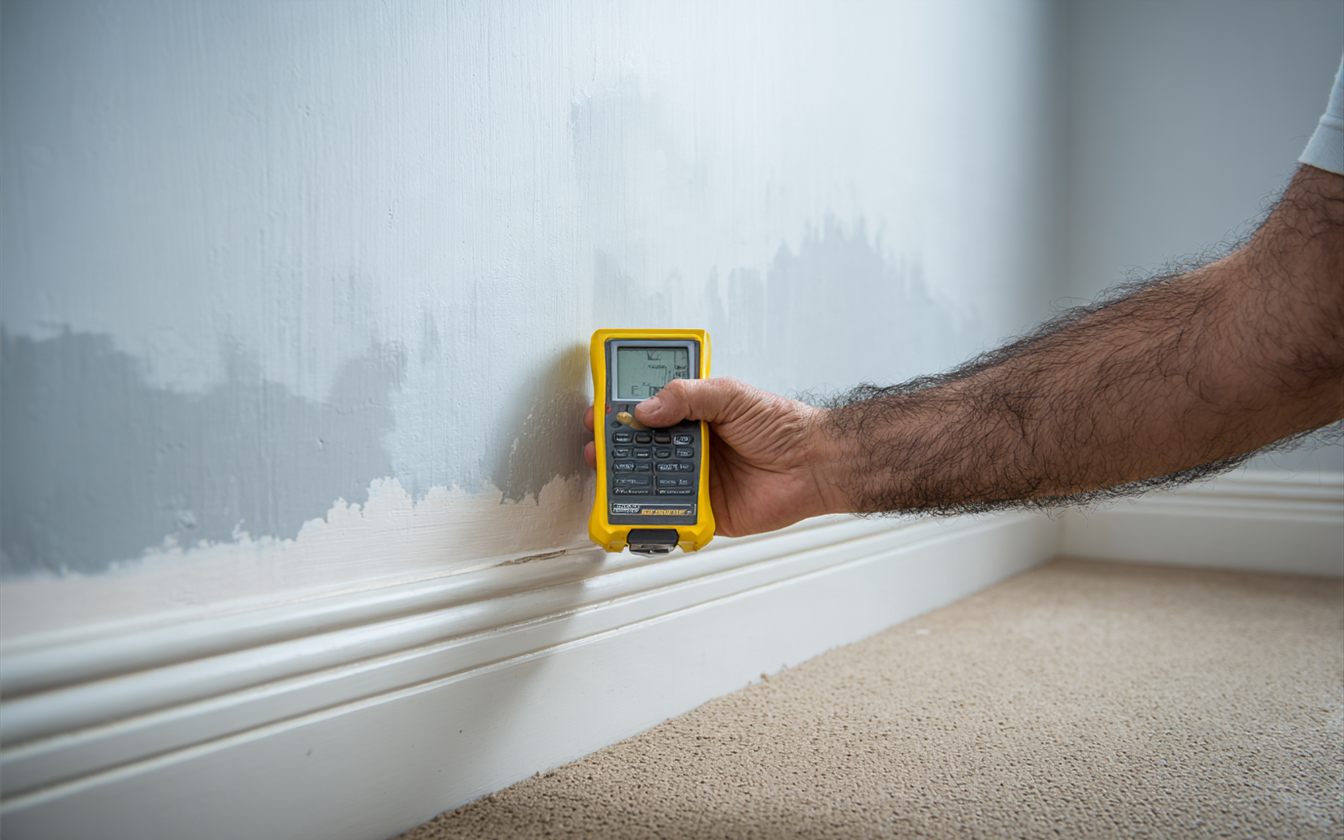
The water you can see is rarely all of it. A leak under a sink wets the cabinet floor, then the subfloor, then the insulation in the crawlspace. A bathroom leak upstairs wets the ceiling below and runs along a joist into the next room. A water damage inspection is how a restoration company finds the edges of all that. It decides what has to come out, what can be dried in place and how long drying will take. Knowing what a good inspection covers helps you tell whether you're getting one.
The Tools
Pin moisture meters push two small pins into wood or drywall and measure moisture directly. They're precise, and they leave tiny holes.
Pinless meters read through the surface without holes, so a technician can sweep across a floor or wall and find where readings jump. They're used to map the wet area quickly, then confirmed with pins.
Thermal cameras show temperature differences. Wet materials are often cooler than dry ones, because evaporation cools them. A thermal image can point to likely wet areas behind a wall or under a floor. It doesn't measure moisture, so readings confirm what the camera suggests.
Hygrometers measure the temperature and humidity of the air. Drying depends on how much water the air can still take, so these readings guide how the drying equipment is set up.
Flashlights, mirrors and inspection cameras help with the places people don't usually look: crawlspaces, the back of cabinets, behind appliances.
What Gets Checked
- The source, if it's known, and whether it's actually stopped.
- The visible wet area: floors, walls, ceilings, cabinets.
- The edges. Readings move outward until they reach dry materials, in every direction.
- Dry reference points. Readings from unaffected materials in the same house, which become the target for drying.
- Below: the crawlspace or the ceiling below, if the water could have gone down.
- Inside walls and cabinets, using meters and sometimes small inspection holes.
- The air, to plan dehumidification.
- The type of water: clean from a supply line, or outside water that needs more removal and cleaning.
Reading the Numbers
Moisture readings only mean something when they're compared. Different meters use different scales, and wood, drywall and concrete all read differently. So the useful question is how a wet spot compares with a dry spot of the same material in the same house, not what the raw number is. That's why a good inspection records dry reference readings at the start. The drying goal is to bring the wet materials back to those reference levels. When you look at a moisture log, you should see the wet readings dropping visit by visit toward the reference numbers. If they stop dropping, something has changed, maybe a leak still running or a space not getting enough air, and the plan should change with it.
Why Some Walls Get Opened
Opening a wall or ceiling isn't the first step, but sometimes it's necessary. Wet insulation inside a wall holds water against the framing and won't dry with the wall closed. Drywall that has wicked water up stays wet behind the paint. Saturated ceiling drywall can fall. A careful company opens what it has to, often a strip along the bottom of a wall or a clean rectangle in a ceiling, so air can reach the cavity. It shouldn't open more than the readings justify.
What You Should Get
At the end of an inspection, you should understand:
- What's wet, and roughly where the edges are
- What the company plans to remove and why
- What it plans to dry in place
- What equipment it will set up, and how often it will check readings
- What it will document for your insurer
Ask for the moisture readings in writing at each visit. They're your record that drying actually finished.
Inspection After the Fact
Sometimes an inspection happens after the obvious water is gone: a stain that dried, a floor that lifted months ago, a smell that won't go away. The same tools apply. Meters will show whether materials are still wet, and a thermal camera can help find a slow leak that's still running.
Questions
Does an inspection cost anything?
That's between you and the company. Ask when you call how it handles the first visit and the assessment.
How long does an inspection take?
A single-room leak can be mapped quickly. A larger loss that spread through floors, walls and a crawlspace takes longer, and the readings continue through every drying visit.
Can I check moisture myself?
Inexpensive meters exist, and they can tell you if something is wet. Mapping a whole loss and deciding what to remove takes training and better tools.
Around Marysville
Inspections are often the first step on calls from Pinewood, Lakewood, Arlington and Machias. The full job is on restoration and mitigation.
Washington L&I: verify a contractor
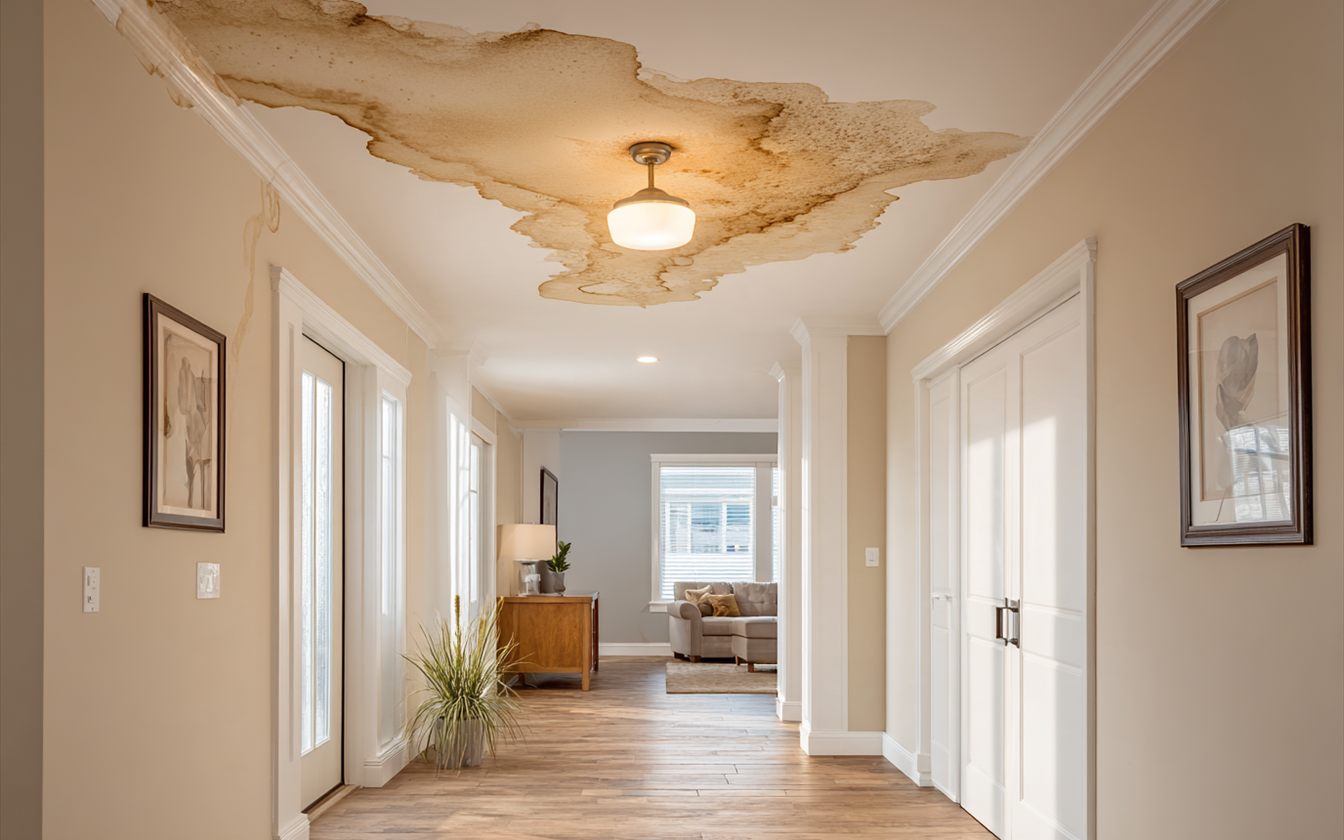
Reading a Water Stain on the Ceiling
What a stain's shape, color and location suggest about its source.
Checking a Contractor's Washington Registration
A short checklist before anyone starts work.