After a leak or a flood, people want the water out fast, and they should. But the restoration company you let into the house will remove materials, run equipment for days and rebuild what it took out. A few minutes of checking before work starts protects you. Washington makes the main check easy: contractors register with the state Department of Labor & Industries (L&I), and anyone can look them up.
Why Registration Matters
In Washington, contractors who do construction work generally have to register with L&I. Registration involves carrying a bond and liability insurance. L&I's lookup also shows whether a business has an account for workers' compensation, which covers workers hurt on the job. If a worker is hurt in your house and the company isn't properly covered, you don't want to find that out afterward.
How to Look a Company Up
- Get the company's exact business name, and its registration number if it has one, from its paperwork, truck or website.
- Go to L&I's Verify tool on lni.wa.gov.
- Search by name or number. Check that the name and address match the company you're talking to.
- Look at the status. It should be active, not expired or suspended.
- Look at the bond and insurance listed with the registration.
- Look at workers' comp. L&I shows whether the business has an industrial insurance account.
- Look at any infractions or violations on record.
It takes a couple of minutes, and you can do it on a phone while the company is on its way. If the name on the truck and the name on the paperwork don't match, ask why before anyone starts, since the registration belongs to a specific business.
A Checklist Beyond Registration
| Ask for | Why |
|---|---|
| Proof of liability insurance | Covers damage the company causes to your property |
| A written scope | Which rooms, what comes out, what gets dried, what gets rebuilt |
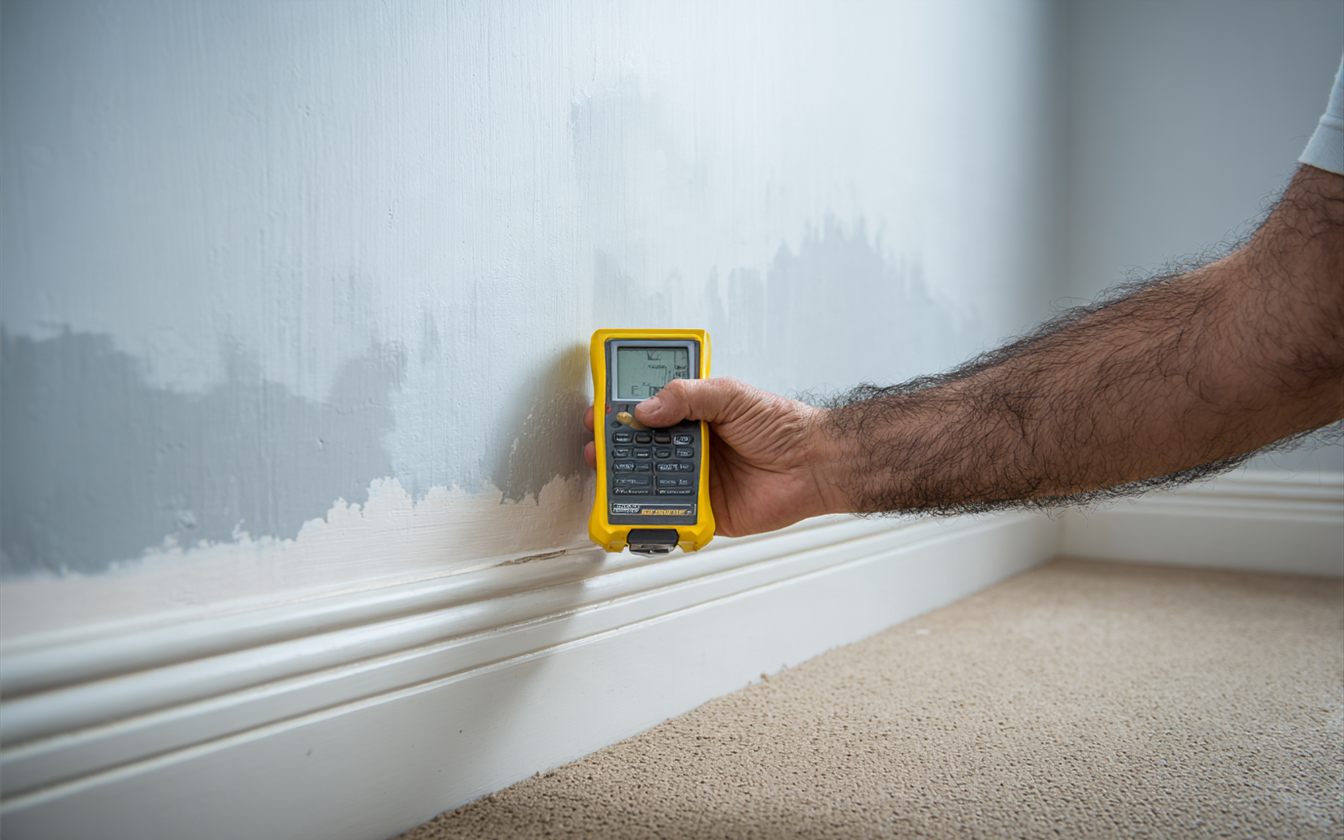
| How drying will be measured | Moisture readings at each visit, with the dry target |
| The readings themselves | Your record that the job is finished, and what the insurer will want |
| Who will be in the house | Employees or subcontractors, and who's in charge |
| A clear split of the work | Which parts the company does, and which need other contractors |
| Time to read anything you sign | Especially anything about your insurance claim |
Read What You Sign
Some agreements include language that lets the company deal directly with your insurer or receive payment from your claim. Read every page before you sign. If something isn't clear, ask, and don't sign until you understand it. If you're renting, the landlord usually signs, not the tenant.
Keeping a Paper Trail
Water jobs often run for a week or more and involve several visits, sometimes more than one crew, and an insurer in the background. A simple folder, paper or on your phone, keeps everything straight:
- The company's name, registration number and the date you checked it on L&I
- The signed work agreement and any change orders
- Photos from before, during and after
- The moisture readings from each visit
- A list of everything removed or thrown away
- Your insurer's claim number and adjuster's contact details
- Invoices and payments, with dates
If a question comes up later, from the insurer or about the work, the folder answers it. It also makes the end of the job clear. When the readings say dry and the rebuild matches the scope, the job is done.
If Something Goes Wrong
Start with the company, in writing, with dates and photos. If that doesn't resolve it, Washington L&I takes complaints about contractors, the Office of the Insurance Commissioner helps with insurer problems, and the Attorney General's Consumer Protection Division handles other consumer complaints. Details are on reach us.
What This Site Does and Doesn't Do
This website and its phone line don't do restoration work, and they don't vouch for any company. A call to (360) 502-8980 reaches an independent restoration company. Checking its registration and insurance is up to you, and this page is here to make that quick. More: about the line.
Questions
What if a company says it doesn't need to be registered?
Ask why. Most construction work in Washington requires registration. L&I can tell you what applies.
Does registration mean the company does good work?
No. Registration means it meets the state's requirements for bond, insurance and registration. Quality is a separate question, so ask for the scope and the readings.
Can I check a subcontractor too?
Yes. The same tool works for any registered contractor.
Around Marysville
A quick check is worth it on any job, whether it's a newer home in Smokey Point, a rural property in Arlington Heights or a beach house in Warm Beach. The whole job is on restoration and mitigation.
Washington L&I Verify Washington Office of the Insurance Commissioner
What a Water Damage Inspection Looks At
Meters, thermal cameras, and why some walls get opened.

Newer Plateau Homes: Where the Water Usually Comes From
Supply lines, garage water heaters, upstairs laundries and ice-maker lines.